Essential Podcast Listening
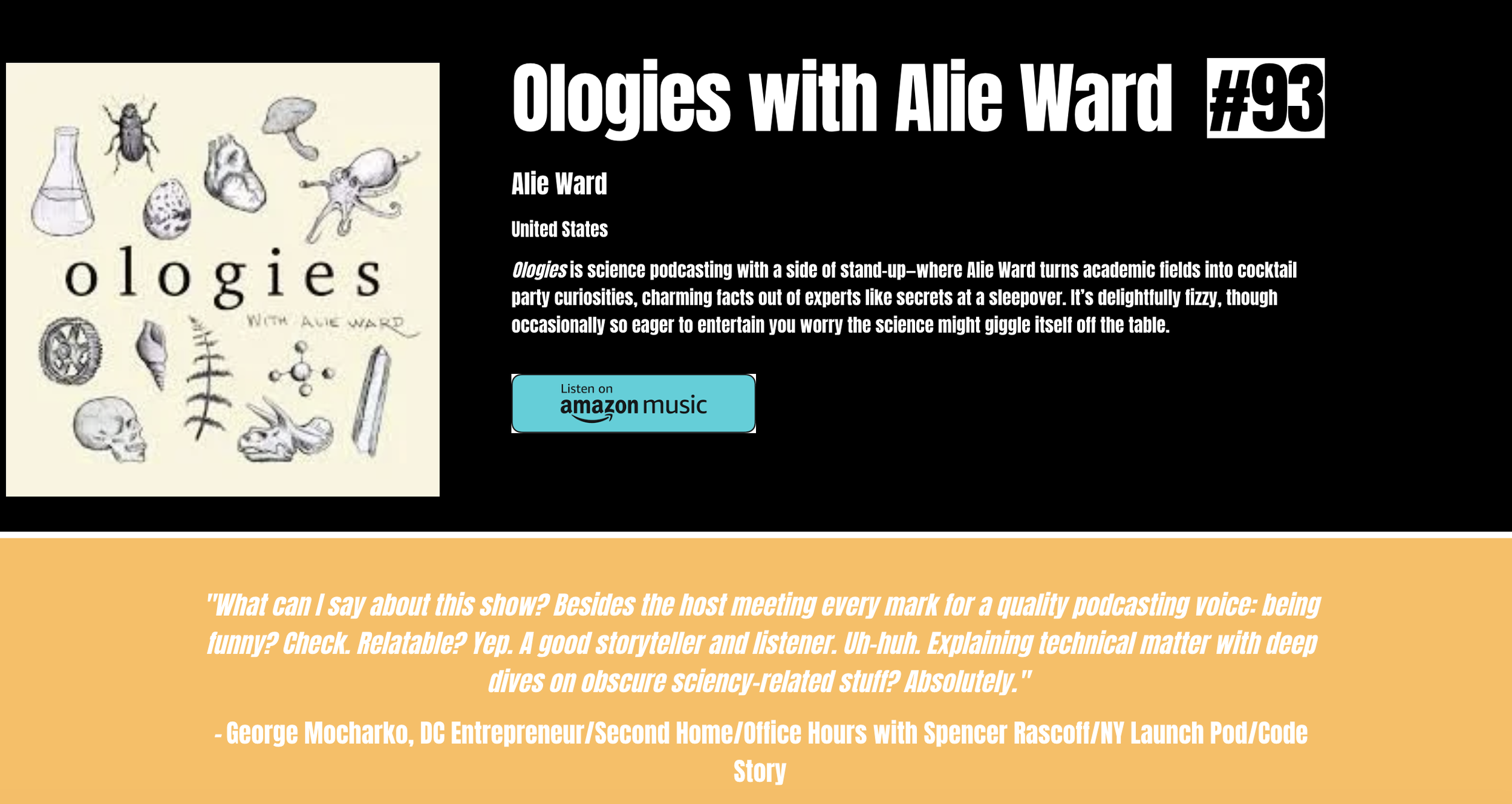
Oh, hey cool! Left of Dial Media used my quote in their Essential Listening Poll of Podcasts which gathered 300 audio creators, podcast hosts, writers, and scholars from around the world for the first time to create the definitive list of the most groundbreaking, influential, and beloved podcasts of all time. Voters were asked to share the five shows that are most important and meaningful to them.
Listen to Ologies, and others from the List of 100 Greatest Podcasts of all Time, and add them so they are next up in your listening queue!
https://lnkd.in/e_Bn8GV4
Judging the Signal Awards
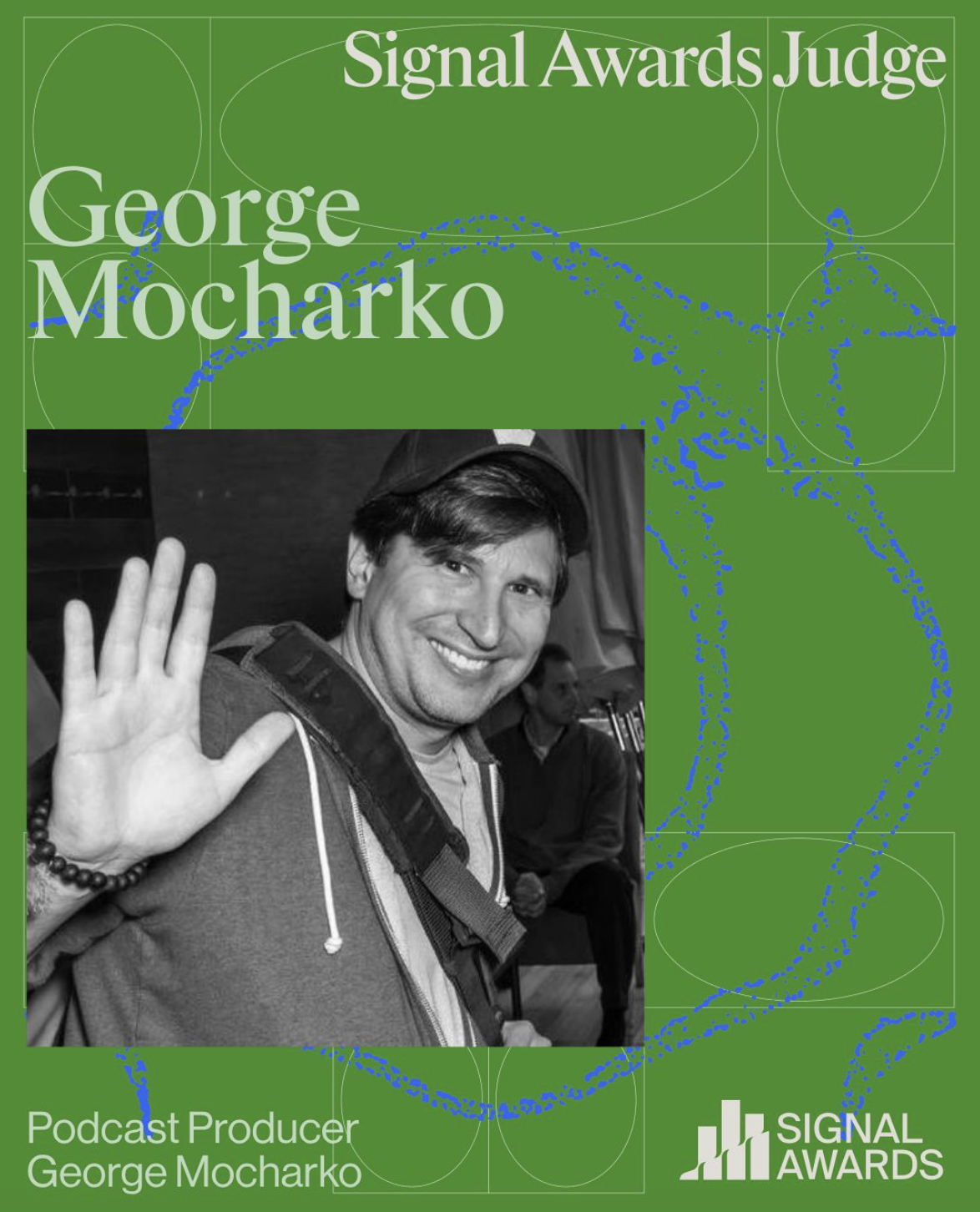
Wow: It's my third year serving as a judge with the esteemed group of professionals and peers in the Signal Awards Judging Academy!
While I've mostly exited from working in the podcast space in 2025 by focusing the majority of my time as a stay-at-home parent and serving as an Election Chief in the many elections we've had recently here in Virginia, being a judge allows me to keep one foot in the podcast world, by taking off my editor hat, and finally having the time listen to the abundance of superb audio being created in the world, without the pressure to produce.
It also brings me into conversation with some of the most innovative and meaningful work happening in podcasting today. The awards are all about recognizing creators who are pushing the medium forward: elevating storytelling, experimenting with formats, and shaping culture through audio.
Being part of the Judging Academy also means getting to listen deeply, engage critically, and help spotlight the projects that truly raise the bar. Audio that resonates, that is original, and what defines the future of this creative space.
Submit your audio to the Signal Awards by May 8th!
Podcasting’s Pivot to VIDEO
Thanks to the NYC Radio listserv for posting a much needed debate last week following this article from The Guardian about Podcasting's pivot to video, which has now being given its own analysis, much as the think-pieces media once gave to the audio first format in the earlier days of audio-on-demand.
Pivoting to video has essentially turned much of everything into "content" without thought about the intent and constraints of the audio and radio medium.
Most of the focus is on getting it done and slapped-up to beat the algorithm and keep "top of mind," versus taking care with production. It's about domination and not diversity.
It's about getting traction for a 30 second clip from a longer interview with a click-bait headline versus earning a listener who will sit and hear you out like the radio hosts and DJs who could be a good hang for an hour or so.
And video has certainly made my last decade (wow) working in the same field (a huge WOW, since I've jumped jobs across so many disciplines) harder to sustain as last year was the hardest for myself and nearly most of us in the space being displaced by AI. Video means pricing my small business out of producing anything with visuals and lighting and cameras, although I have that stuff, and having other people on staff means less one-person production skilled editing shops that seldom outsource work because there is no path to scale-up.
The production skillsets are entirely different with visual thinking and auditory thinking audio is in service of narrative not the other way around.
Working in audio has been more a labor of love than making a living—I swear I didn't set out to be another starving artist—yet my ascetism has made me think that the pivot to video is another cynical way for the hardware industry to be a "picks and shovel" business selling equipment to us creators. Selling us another microphone or plugin we don't need and have to invest in learning to use, when we should be focusing on our specific crafts.
I mean, bad analogy here, but did Miles have to learn the drums too as a trumpet player?
I've made due with a very limited cost of operation in my short 5 year run as an actual business that sprouted from a podcast, but licenses, software, plugins, ongoing training, web domains for such little revenue means the reason the podcast medium became so loved is because there was space for OUR VOICES not the well-moneyed, elite, and celebrities (who by the way, last time I checked, HAVE ACCESS to larger platforms than we do).
And while I done some production for these folks, I don't sense the longer term commitment to the medium aside from people like Maron—who wisely got out of the game last year—aside from trying to get cast in their next role or land funding for their next project.
I think audio first. I usually say "I hear you" versus "I see you."
I'm not sure if that is because my glasses prescription made me be audio first or if it is ingrained into how I process the world, audio-visual thinking, not visual-audio thinking.
In fact, I'm one of those people that replay snippets of conversations in my head years later (for better or worse with a history of lifelong, self-critical inner monologues of past actions) which is while I'm better suited to editing audio than video, as the visual takes on other factors and dimensions, and the visual and audio mediums haver never crossed over in my professional work.
And although over the years I paint on canvas, draw, and shoot photography, I will never consider myself an artist first. My BS is just not that good and I would never survive my first "crit" if I were ever brave enough to attend formal art school.
While the expense of making video productions has dropped, I respect the craft of visual storytellers too much to think that podcasts have any business entering their sacred space of storytelling. And I hope that visual craftspeople consider audio in a similar way.
As Nick Messitte commented on the listserv thread, while perhaps raining on another optimists' parade, "that the pivot to video is a bid to sidestep unions, and spend less money for television talk shows...Call a TV show a podcast, and you no longer have to deal with unions."
https://www.theguardian.com/tv-and-radio/2025/dec/27/podcasts-rush-to-video-turning-them-into-dreadful-listens
Welcome to Liner Notes.
Recording audio has been a huge part of my life since I was a little kid. One of my first memories is of running around with a tape recorder taping everything I could find: The radio, my parents, my friends. Usually it was telling jokes or being silly.
My cousin came to visit my family in Southern California in the early 80s, and he first ignited the interest in what you could do with a tape recorder. After tiring of all the matchbox cars and other he toys, he found my dad’s office tape recorder. A black Sanyo device that looked like a black brick. He created a character named “Larry Larry,” probably inspired by someone like Larry King, and proceeded to create on the spot, a call-in talk show, doing all the voices while I could barely get a word in. To this day, I listen back to that tape. Not only because it has voices of my mom, my dad, my uncle and aunt who have all passed, but because it was such a formative part of my life. Something about that experience set off an interest in recording sounds, and I used to burn through cassette after cassette recording things.
When I faced a mid-career crisis, thinking about what I really wanted to do next. I thought back to all the things I did as a kid, and this was the first thing that really resonated with my soul. I had started a podcast at a previous job without pitching it to my boss. I started recording interviews with book authors who were sending me advance review copies of their work.
While the podcast really didn’t have enough promotion to get going, and my office co-workers didn’t exactly get the whole thing. I recalled that experience as something that I wanted to do, even if it wasn’t something that made money.
So podcasting more than anything was a calling than it was an assignment. Archiving my conversations with people also helped me recall interesting things that they said. Life lessons, wisdom, advice that would have passed my busy brain away had I not listened carefully as I did when cutting tape later.